Arpan is a leading NGO working on the issue of Child Sexual Abuse also marked its 10th anniversary today.
Caption
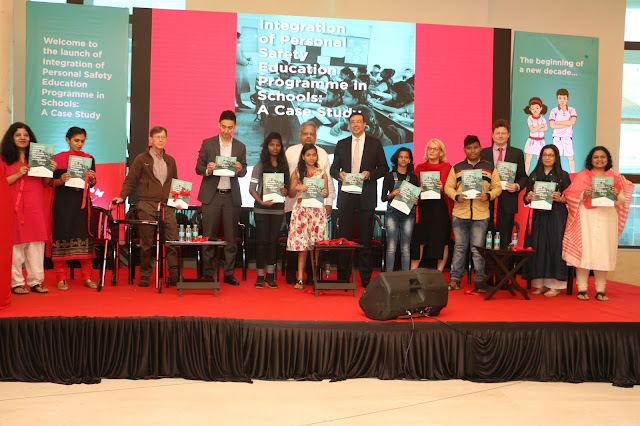
for panel discussion photo – L to R, Pooja Taparia
(Founder & CEO, Arpan), Dr. David Finkelhor (Director of Center for Crimes
Against Children, New Hampshire University, USA), Javier Aguilar (Chief of
Child Protection programs, Unicef India), Rakesh Jhunjhunwala (Founder,
Rare Enterprises), Sonjoy Chatterjee (Chairman, Goldman Sachs India),
Beatrice Bondy (Strategic Advisor to Mr. Karl-Johan Persson, CEO, H&M),
Peter Kenyon (Director, The Marshall Foundation), Archana Chandra (CEO, Jai
Vakeel, A.T.E. Chandra Philanthropic Foundation).
Arpan, a leading NGO working on the issue of Child Sexual Abuse launches a case study titled ‘Integration of Personal Safety Education Programme in Schools: A Case Study.’
Mumbai, 29th November 2017: Child Sexual Abuse is a startling everyday reality for as many as half of the country’s children (Child Sexual Abuse Report 2007). 54.5% of total incest rape victims are children below 18 years (NCRBI 2015). Maharashtra reported maximum cases of crime against children which accounts for 14.8% of total such reported cases (NCRBI 2015). With the ever-increasing reports of child sexual abuse, we know that the scenario is not too different even today. Child Sexual Abuse can cause relationship issues, suicidal tendencies, Post-Traumatic Stress Disorder and other psychological impacts. It can also result in significantly poorer academic performance, poorer mental and physical health, greater substance abuse and poorer parental relationships than their non-abused counterparts. There is, therefore, an urgent need to empower children with adequate knowledge, attitude and skills to prevent instances of Child Sexual Abuse as well as to seek support if an incident occurs. It is also important to create awareness with parents, teachers and school staff about child sexual abuse so that they can play an active role in the safety of children and provide a supportive environment to the child should there be any instance of abuse.
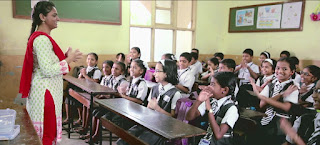
Arpan is a Mumbai based NGO that teaches personal safety skills to children in schools. Over the last 10 years, Arpan has taught over 75,000 children and adolescents and created awareness about Child Sexual Abuse amongst 57,000 parents and teachers through the Personal Safety Education Programme. Arpan has also trained teachers to integrate Personal Safety Education into their school curriculum so that children remember personal safety messages year on year and in an unsafe situation will report to a trusted adult. Bombay Cambridge Gurukul (BCG) Schools in Bombay integrated the Personal Safety Education (PSE) Programme in their curriculum in the year 2010 after being trained by Arpan. The teachers of these 5 schools themselves teach personal safety to children.
This research report, ‘Integration of Personal Safety Education Programme in Schools: A Case Study’ is an evaluation of the impact of integrating the Personal Safety Education Programme in the BCG group of Schools. The evaluation was conducted in the five schools of Bombay Cambridge Gurukul (BCG). Focus Group Discussions (FGDs) were conducted with 152 children from 5 schools from 5th, 6th and 7th standards. Among these 152 children, individual interviews were conducted with 31 children. 5 headmistress and principals, 10 teachers (who conduct Personal Safety Education programme), 5 counsellors, 9 parents, CEO and Head of Dept - HRD were interviewed.
The key findings of the study were:
- Children demonstrated increasing help-seeking behaviour as they identified unsafe situations, used refusal skills, and reported it to a trusted adult almost immediately. All 9 children (out of 31 children with whom the individual interview was conducted) who disclosed about past unsafe experiences in the study sought help from their trusted adults and were able to evolve a plan of action to ‘Get Away’ from the situation. In the Focused Group Discussions conducted with 152 children, all children were able to bring out an immediate response, an intermediary resolution and a long-term solution for unsafe situations that the protagonist faced in the assessment trope that was used to elicit responses. Children’s narratives of using refusal skills and accessing help are also substantiated by parents, teachers and counsellor's accounts.
- The Management of schools of BCG developed a Child Protection Policy with a focus on responding to Child Sexual Abuse. The Child protection policy was child-friendly and responsive and showcases their knowledge on the issue of Child Sexual Abuse.
- Children, across all groups, were comfortable about their body, knew that their body belonged to them and believed themselves to be active participants in ensuring their safety. They were comfortable with naming Private Body Parts and remembered the Personal Safety Rules/Guidelines.
- Children recognised that Personal Safety Education inculcates them with skills to face ‘life’ as “PSE is about life”. Children shared their learnings with their siblings, cousins or friends or by leaving messages for other children through this evaluation.
- Parents recognised Personal Safety Education Programme as age-appropriate, necessary and adequate. They were comfortable with the content and delivery of the programme. Parents identified the Personal Safety Education programme in aiding their communication with children on personal safety.
- Teachers were well aware of signs and symptoms of Child Sexual Abuse and were proactive in responding to a child’s disclosure.
- Teachers recognised Personal Safety Education Programme as a systematic age-appropriate model with adequate teachings aids and activities. It helped teachers to initiate dialogue on this issue in a non-threatening manner. It also helped to streamline the process of handling disclosures of Child Sexual Abuse.
- Teachers had taken the learnings from the PSE classrooms and had created safe environments in their homes and personal spaces.
Ms. Pooja Taparia, Founder & Chief Executive of Arpan commented “Arpan has been a pioneer in evolving and conducting a holistic prevention and intervention school-based model, the Personal Safety Education programme. Over time we have seen that when schools take up the Personal Safety Education Programme and invest in it, it doesn’t just empower children with the necessary knowledge skills and attitude to prevent instances of Child Sexual Abuse but also empowers their caregivers like teachers and parents in supporting the child in case of any abuse. Given the increased reporting of child sexual abuse over the past few months and how safe schools are emerging as a need of the hour, it is heartening to see the results of the evaluation. It corroborates our belief that Prevention of Child Sexual Abuse is possible if we incorporate this critical life skill training in the school curriculum and if schools take ownership of teaching this to every child in their school.”
Dr. David Finkelhor - Director of Crimes against Children Research Center, University of New Hampshire, USA, a renowned sociologist studying the problems of child victimization, child maltreatment and family violence since 1977, said, “Child Sexual Abuse is a global phenomenon, one that needs immediate attention. With studies showing 1 in 2 children in India experiencing some form of sexual abuse (Child Abuse Study 2007 by Government of India), it is critical that measures for prevention of child sexual abuse are taken up not just by the Government but also at the ground level by schools, communities and the society at large. Through my years of research, I have found that one of the primary strategies that are most effective in the prevention of child sexual abuse is school-based educational programmes. I am happy to see that this evaluation substantiates the effectiveness of school-based prevention programmes in the Indian context as well.”
Javier Aguilar (Chief of Child Protection programs, Unicef India) said “After so many efforts to respond to children in need of care and protection, we all need to complete this important work by strengthening prevention. Prevention is the best form of protection and school based programmes, one like Arpan is a promising way to take prevention forward.”
Rakesh Jhunjhunwala, Founder, RARE Enterprises a longstanding patron of Arpan said “I am very pleased to see the effectiveness of the Personal Safety Education programmes that Arpan is running in schools. I have supported this project since 8 years and I believe that the issue of Child Sexual Abuse needs to be addressed urgently. Children are the future of our country and investing in them is investing in the future of our country.”
About Arpan:
Arpan is an award-winning* organisation working hard to address the issue of Child Sexual Abuse in India. Arpan has won 6 National-level awards and 1 International award for its exemplary work. Based in Mumbai, Arpan is the largest NGO in India with over 85 social workers and counsellors providing prevention and intervention services to children and adults.
Mr. Rakesh Jhunjhunwala (R. Jhunjhunwala Foundation, India), Mr. Karl-Johan Persson (CEO, H&M Worldwide, Sweden), Goldman Sachs (India), Eros International Media (India), The Marshall Foundation (France), GMSP Foundation (UK), The Global Fund for Children (USA), Azim Premji Philanthropic Initiatives (India), A.T.E and Chandra Philanthrpic Foundation (India) are some of our key supporters year-on-year.
*Arpan won the India NGO National Award, 2011 , Jamnalal Bajaj Uchit Vyavahar Puraskar , 2011, Global NGO Excellence Award, 2015, Dasra Girl Power Award, 2015, “The Most Committed NGO” in Early Childhood Care and Education, 2017, Spirit of Humanity Award, 2017 for it's exemplary work in the social sector. Arpan also won an international award, C. Henry Kempe Award by ISPCAN, for doing significant work in the area of Child Abuse.